DESERT FLOWERS, Giza
Giza Pyramids, Cairo, Egypt
Corten and Recuperated Scrap
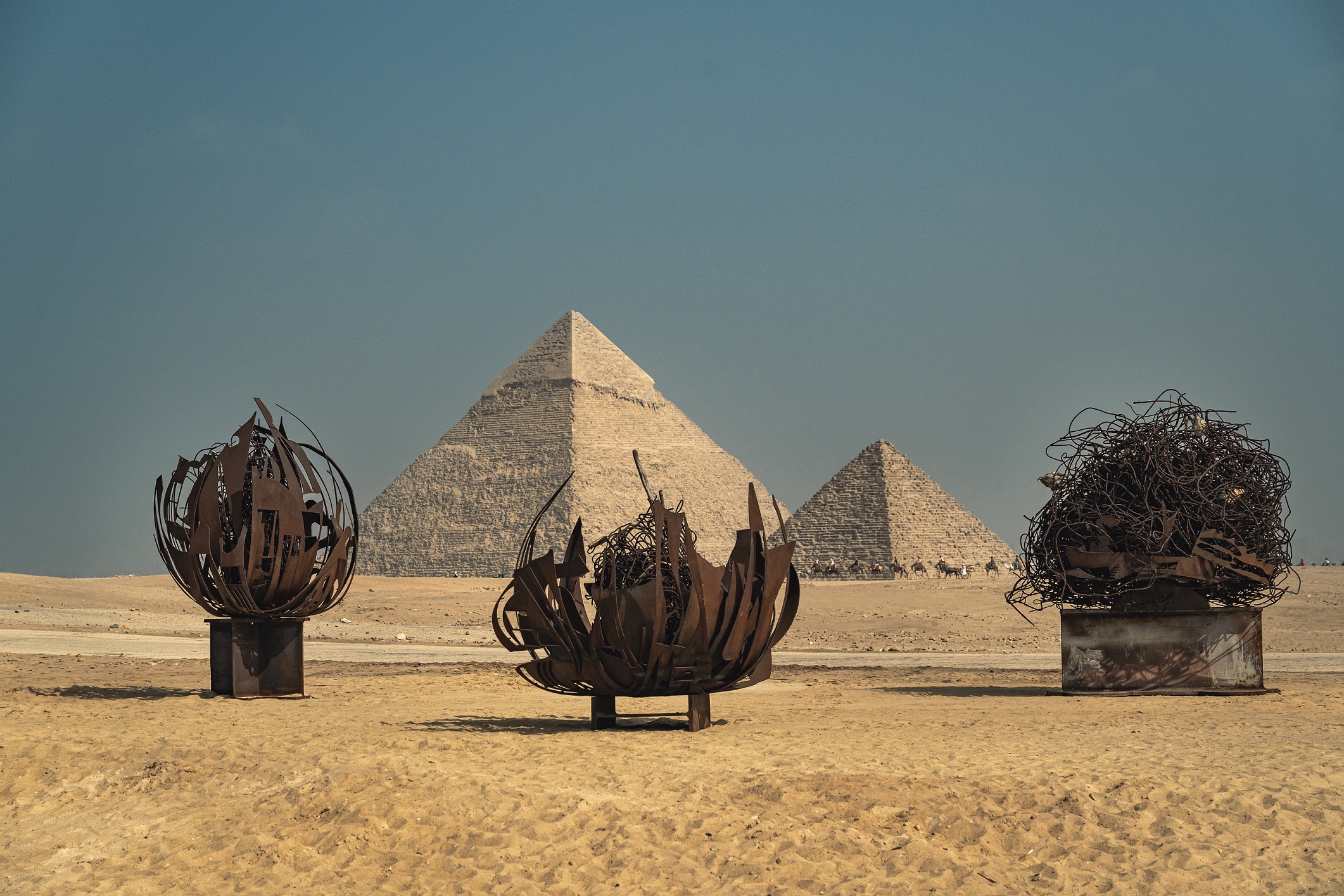
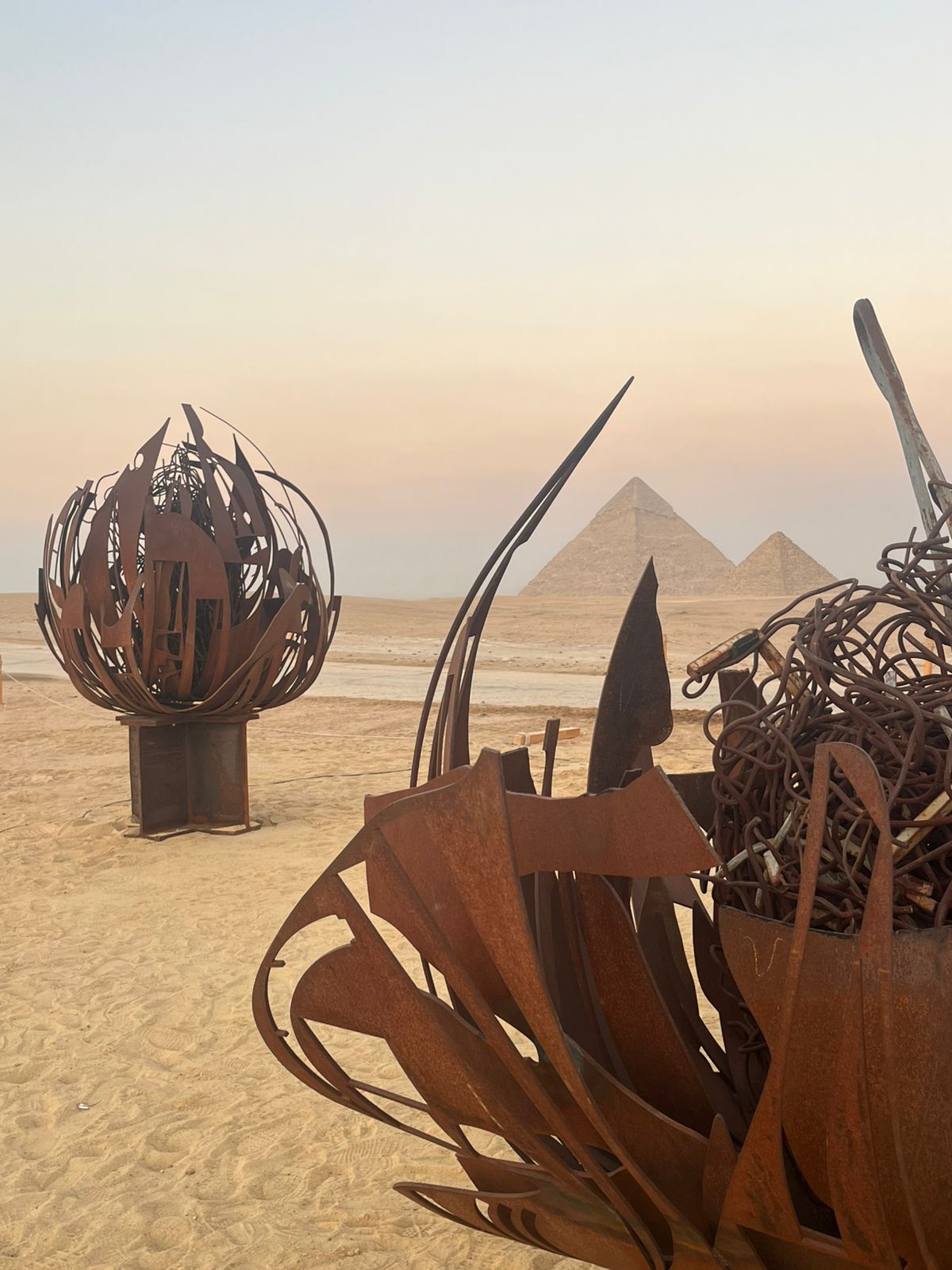
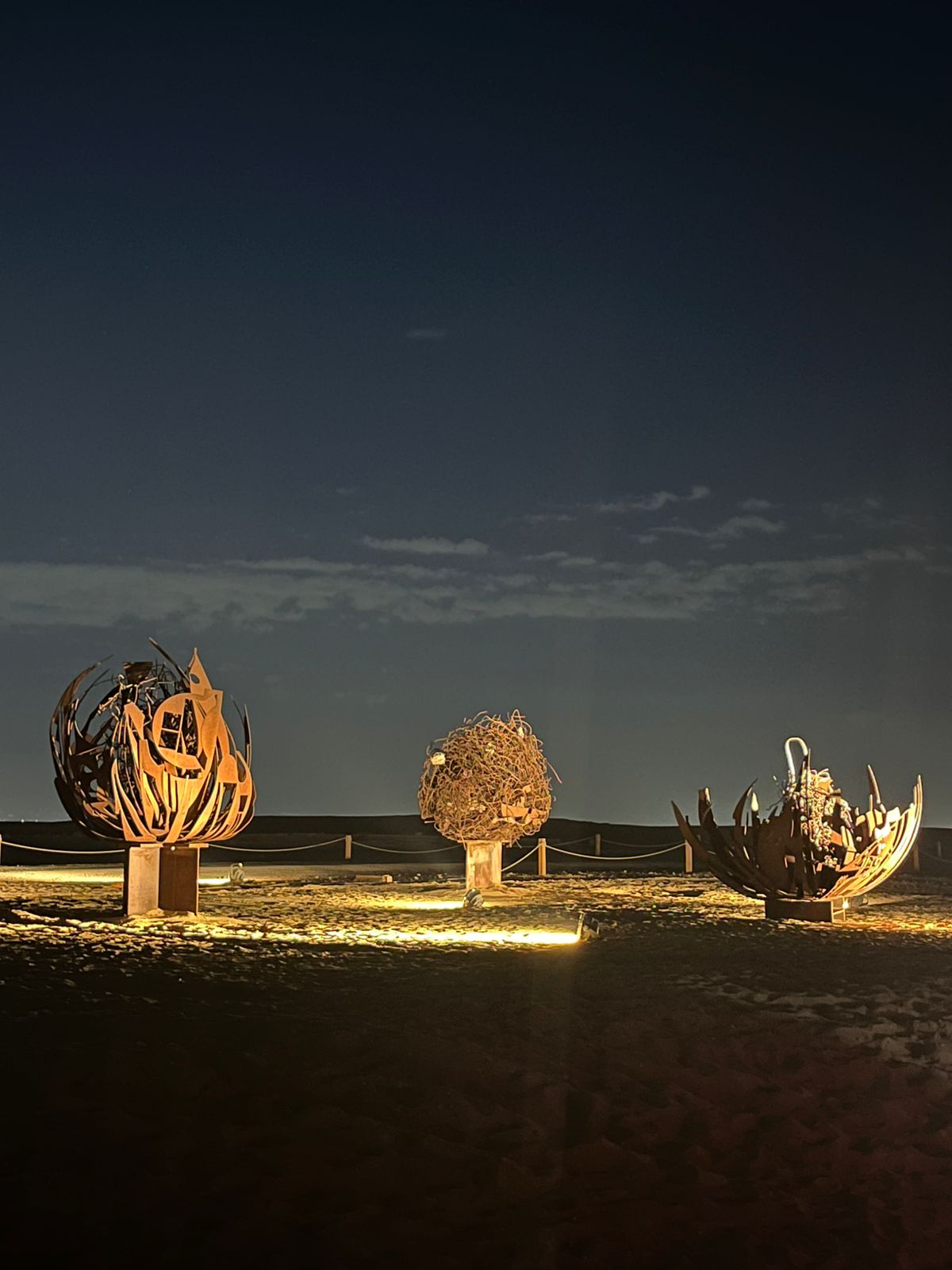
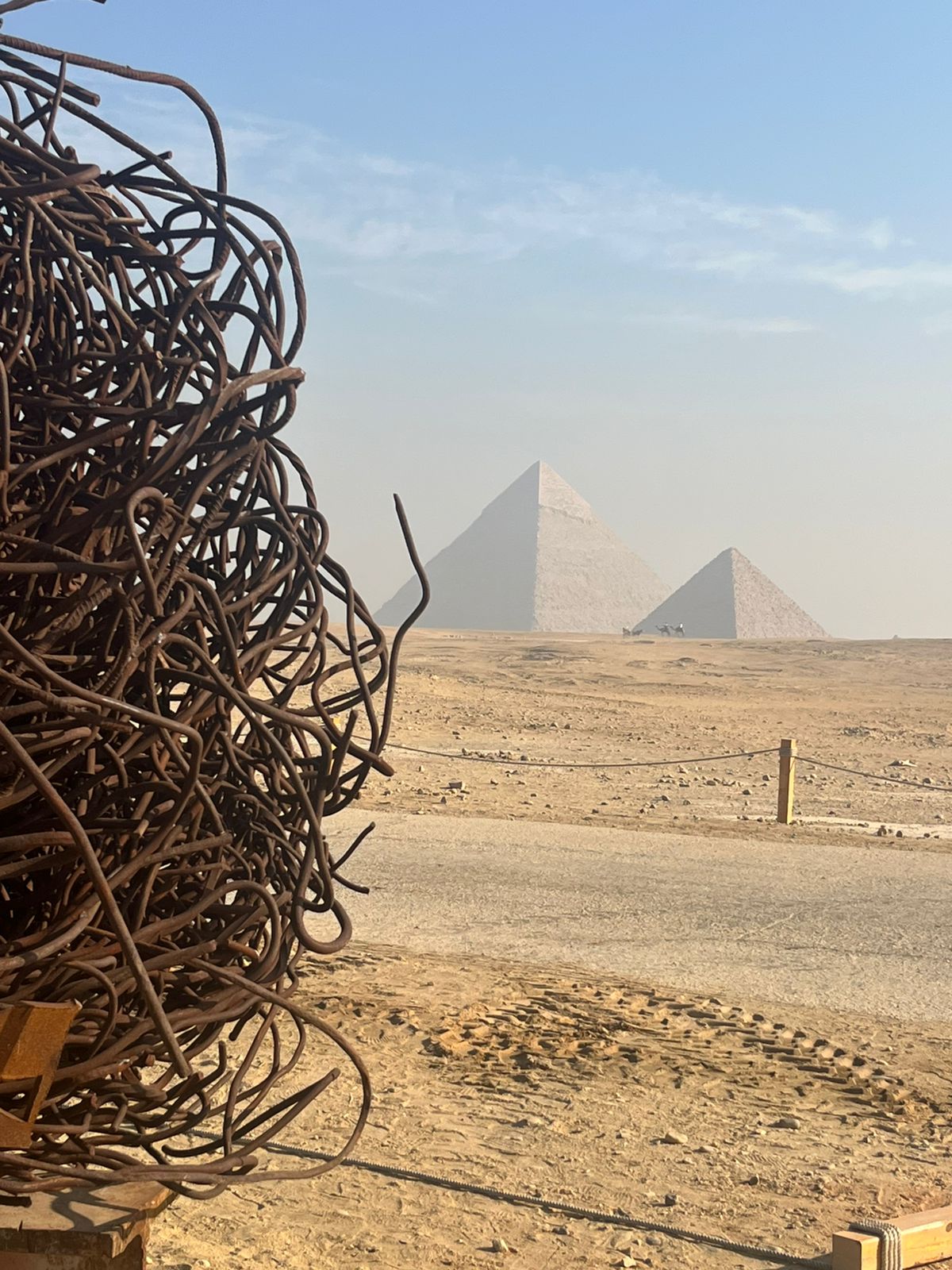
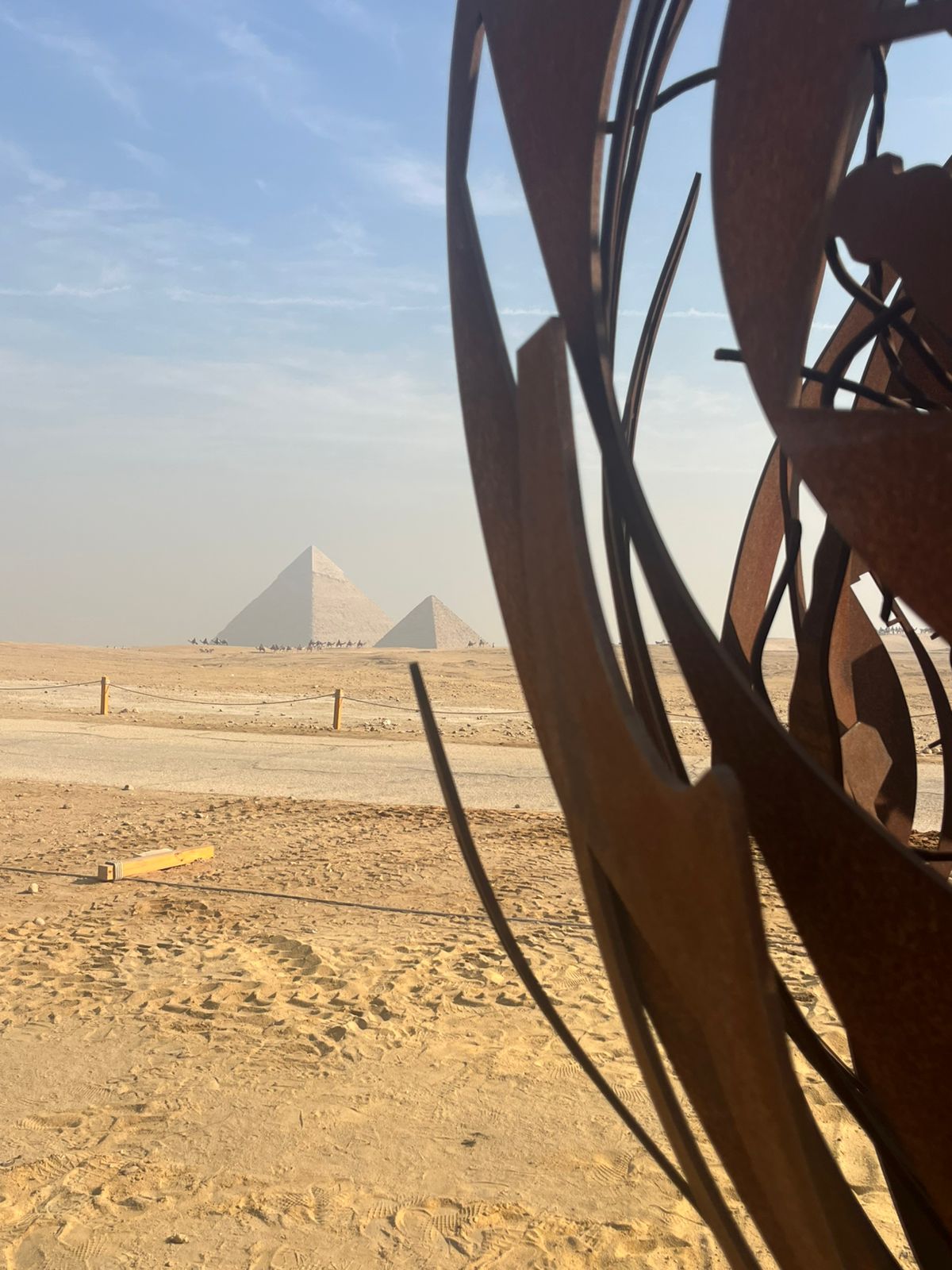
The Desert Flowers features three sculptural flowers emerging from the sand—appearing like lotus flowers unfolding in the desert landscape near the Pyramids of the Giza Plateau. Each flower holds a heart of hidden, untold stories, formed from scrap, while its petals bear patterns crafted from recuperated materials from Nadim Karam’s previous works. The installation reflects on how history, space, and time shape which narratives are preserved and which are forgotten.
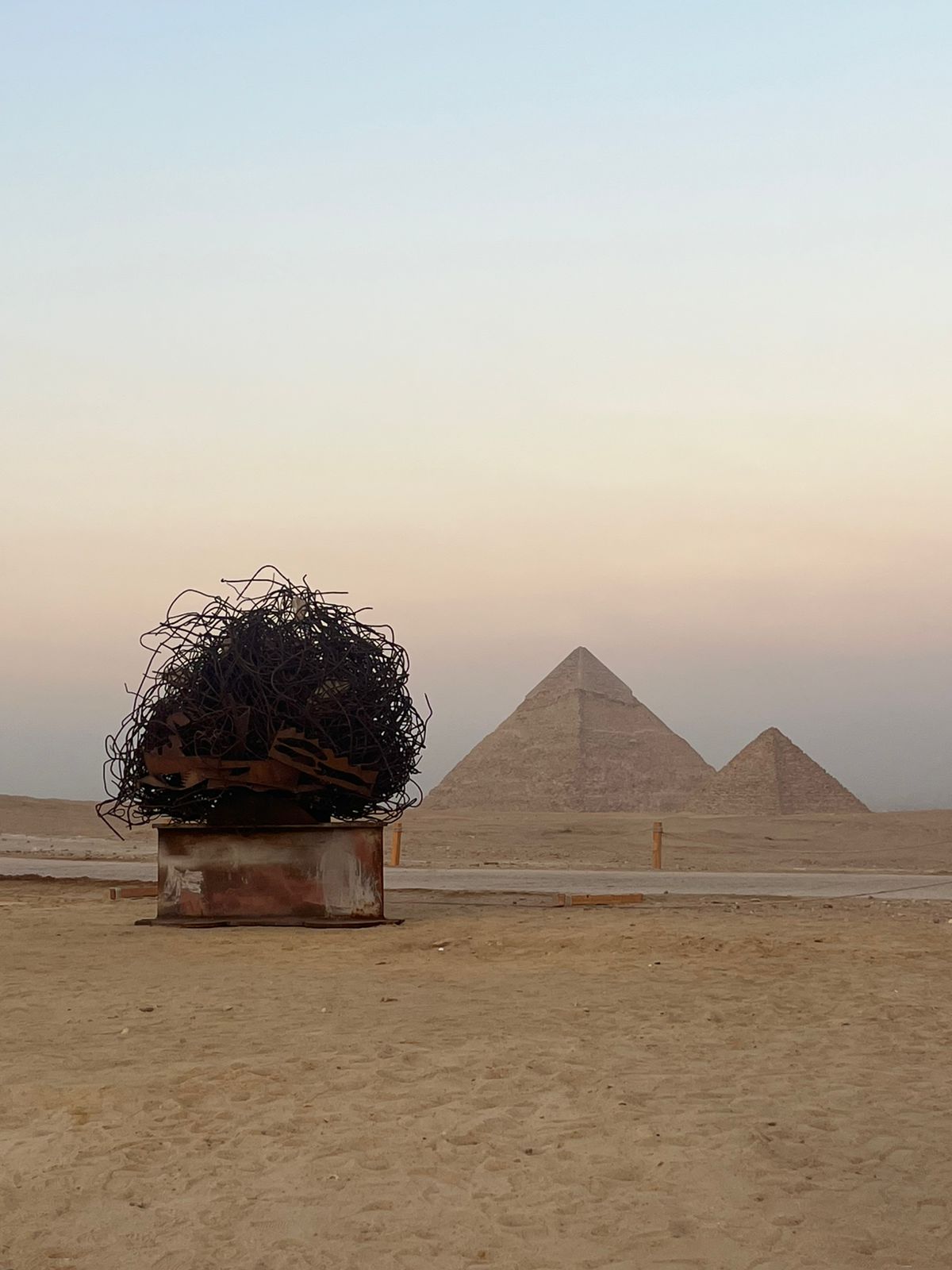
A powerful symbol in ancient Egypt, the lotus represented the sun, rebirth, and creation—once abundant, it has now largely vanished from its native landscape. The three sculptures visually narrate the process of a lotus flower emerging from a bud. The first, SUN, remains rough, its petals still hidden in jagged metal scraps. The second, REBIRTH, begins to unfurl, symbolizing emergence. The third, CREATION, blooms fully.
Inspired by Egypt’s rich history and, more broadly, the history of the world, the installation meditates on how recorded narratives can coexist with unheard voices and cultural signifiers. In Egypt, history has been meticulously recorded in stone and script, yet many voices and events surely remain lost. The Desert Flowers transforms abandoned fragments into symbols of resilience, much like these lost stories that quietly persist beneath the surface.
These sculptures are conceptually derived from Karam’s Stretching Thoughts, Neglected Thoughts, and Compressed Thoughts series, where discarded materials represent forgotten ideas and histories. The installation mirrors the unfolding of unspoken stories, reclaiming space in collective memory, thus suggesting that contemporary artistic voices can reawaken the layered cultural markers and history of a space.